TikTok workflow

Follow an Exolyt Tutorial TikTok Workflow

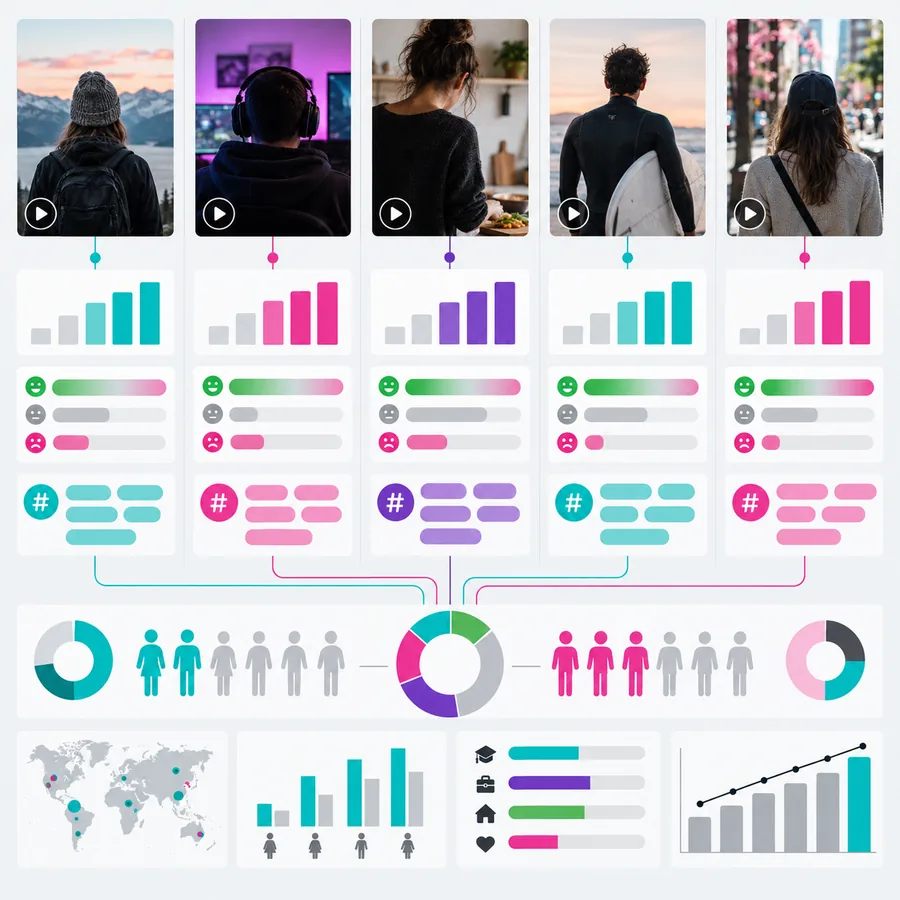
This Exolyt tutorial tiktok guide shows how to move from a TikTok profile or video to a useful analysis without getting lost in surface-level numbers. Use the sequence below to prepare your inputs, inspect the right metrics, check your interpretation, and turn findings into practical next steps.

Exolyt tutorial workflow for reviewing TikTok analytics

Before you begin

Prerequisites

Gather the minimum context before opening an analysis. These requirements make the results easier to interpret and reduce avoidable backtracking.

Required Optional
  • A TikTok profile, creator, hashtag, or video you are permitted to research.

    Required

    Use the public identifier or URL when available.

  • A specific question, such as whether a content format is gaining traction or which videos deserve closer review.

    Required

    Write it down before checking metrics.

  • A comparison set of similar videos, creators, or time periods.

    Required

    One isolated result rarely explains performance.

  • A date range that matches the decision you are trying to make.

    Required

    Keep the period consistent across comparisons.

  • A simple notes sheet for recording observations, links, dates, and follow-up questions.

    Optional

    A spreadsheet or plain text document is enough.

  • Permission to save or share any research notes that contain creator or campaign information.

    Optional

    Follow your team and platform policies.

Core method

Numbered steps

Use this three-part process every time. The order matters because interpretation becomes weaker when you jump straight into rankings or isolated percentages.

  1. 1

    Define the question and scope

    Choose one profile, topic, or content group and state what you need to learn. Record the account name, relevant URLs, date range, and the comparison you expect to make. A focused question might be whether short tutorials outperform product demonstrations, not simply whether an account is popular.

  2. 2

    Inspect the evidence in context

    Review profile-level signals first, then move to individual videos and recurring patterns. Look at views, likes, comments, shares, posting dates, formats, captions, and other available context together. Compare similar items rather than treating the highest number as the automatic winner.

  3. 3

    Record the conclusion and next action

    Write a short finding that names the evidence, the limitation, and the action it supports. For example, a format may attract more views but fewer comments, suggesting a reach opportunity rather than proof of stronger community interest. Save the reviewed links so the conclusion can be checked later.

Quality control

Common errors and fixes

Most weak TikTok analyses fail because the workflow skips context. These checks help separate a useful signal from an attractive but unsupported number.

Mistaking views for overall success

A high view count tells you that content was watched or distributed, but it does not explain retention, audience fit, conversation quality, or business impact. Compare views with likes, comments, shares, posting date, and the role the video played in the account’s wider content mix.

FIX

Describe views as reach evidence unless you also have a clear outcome measure.

Comparing unlike videos

A long tutorial, a short trend response, and a live-stream clip may serve different goals. Comparing them in one ranking can make a format look better simply because it had a different distribution pattern or audience expectation.

FIX

Group comparisons by format, topic, age, and intended outcome before drawing a conclusion.

Ignoring timing and recency

A new video may still be accumulating attention while an older post has had much longer to collect interactions. Seasonal topics, platform trends, and posting cadence can also change the meaning of a result.

FIX

Always record the review date and use comparable age windows when possible.

Treating a small sample as a rule

Three successful posts can reveal a promising hypothesis, but they cannot establish a dependable content strategy by themselves. Look for repeated patterns across enough related items to make the conclusion worth testing.

FIX

Label early findings as hypotheses and schedule a follow-up review.

Workflow evolution

How this format got here

A good tutorial workflow has developed from simple profile checking into a more disciplined cycle of questions, comparisons, and documented decisions.

  1. Profile-first checking

    Early reviews often began with a quick look at a creator page and a few visible totals. This was useful for orientation, but it provided little explanation for why specific videos performed differently.

  2. Video-level comparison

    The next improvement was to compare individual posts by topic, format, date, and engagement signals. This shifted the review from a single account snapshot toward observable content patterns.

  3. Context-aware analysis

    Analysts began treating metrics as evidence that needs context. Date ranges, sample selection, audience intent, and the difference between reach and interaction became part of the standard review.

  4. Repeatable reporting

    The current best practice is to save the research question, inputs, comparisons, caveats, and next action together. A repeatable record makes future reviews faster and helps teams challenge assumptions.

Hands-on walkthrough

Numbered steps in practice

The following examples show what to do at each stage when the first result looks interesting but is not yet enough to support a decision.

Preparing a focused TikTok analysis brief

01 — Start with a narrow research brief

Write a one-sentence brief before collecting data: identify the account or topic, the period, and the decision you are supporting. Then choose a manageable sample, such as recent videos in the same category. This prevents the review from expanding into unrelated profiles and makes your notes easier to audit.

WORKING NOTE

If you cannot state the decision, you are not ready to interpret the metric.

Comparing similar TikTok content groups

02 — Build a fair comparison

Select items that share meaningful characteristics. Compare tutorial videos with other tutorial videos, recent posts with similarly aged posts, and campaign content with content created for the same purpose. Record both the strongest and weakest examples so the pattern does not become a highlight reel.

COMPARISON RULE

Change one important variable at a time whenever the sample allows it.

Turning TikTok findings into a next test

03 — Turn observations into a test

Finish with a conclusion that can be acted on and checked. State what happened, what may explain it, what remains uncertain, and what you will test next. A useful output is not a perfect prediction; it is a better next experiment grounded in visible evidence.

FINAL CHECK

Every conclusion should name evidence, uncertainty, and a next action.

Know the boundaries

What this route cannot do

A tutorial can improve your process, but no analytics workflow removes uncertainty. Keep these limits visible when presenting findings.

  • It cannot prove causation

    A correlation between a format and stronger engagement does not prove that the format alone caused the result.

    WorkaroundRepeat the comparison with a controlled test and track the outcome over time.

  • It cannot replace audience judgment

    Numbers may show what happened, but they cannot fully explain audience intent, brand fit, tone, or cultural context.

    WorkaroundPair metrics with comments, content review, and knowledge from people close to the audience.

  • It cannot make incomplete data complete

    Missing dates, deleted videos, private content, or inconsistent samples can weaken any conclusion.

    WorkaroundMark gaps explicitly and narrow the claim instead of filling missing evidence with assumptions.

  • It cannot guarantee future performance

    TikTok distribution changes, and a past pattern may not continue under a new trend, audience mix, or publishing cadence.

    WorkaroundTreat findings as a current hypothesis and schedule a fresh review.

Go further

Advanced tips

Once the basic workflow is consistent, add depth without making every review longer. Choose the advanced view that matches the audience for your report.

Use patterns to plan the next batch

Creators can use the workflow to identify repeatable ingredients without copying one successful post. Separate the topic, opening, structure, length, visual treatment, and call to action, then test one change at a time.

  • Group posts by format before ranking them.
  • Save strong and weak examples together.
  • Review comments for questions that could become future topics.
  • Compare performance after similar time windows.

Make findings easy to challenge

Marketing and research teams need a record that another person can inspect. Include the question, sample definition, review date, comparison logic, key observations, caveats, and recommended next step in the same report.

  • Use consistent names for formats and topics.
  • Separate observed facts from interpretation.
  • Link every major claim to the reviewed content.
  • Record why items were included or excluded.

Look for durable signals

Researchers should focus less on a single winner and more on whether a pattern survives reasonable changes to the sample. Check different time windows, comparable content groups, and alternative explanations before describing a finding as durable.

  • Test the pattern against a second sample.
  • Check whether outliers drive the result.
  • Distinguish reach, interaction, and conversion goals.
  • State the confidence level in plain language.

Ready to review

Turn a TikTok question into a repeatable workflow

Use the sequence on this page whenever you need to investigate a profile, compare content, or explain a performance pattern. Start with a focused question, keep the sample fair, and leave a clear record of what the evidence can and cannot support.

Begin your review
  • Define the decision before collecting metrics.
  • Compare like with like and record the date.
  • End every review with a testable next action.

Need to know

Tutorial FAQ

These answers cover the practical questions people commonly ask when looking for an Exolyt tutorial tiktok workflow.

Start by defining the question you want the analysis to answer, then choose the profile, videos, topic, and date range that fit it. Without that scope, it is easy to collect interesting metrics that do not support a real decision.

Compare videos with similar purposes, formats, topics, and ages whenever possible. Review several signals together, including views, likes, comments, shares, posting date, and content context, rather than ranking videos by one number.

It can help you identify patterns and plausible explanations, but it cannot prove a single cause from surface metrics alone. Treat the result as a hypothesis, then test the suspected format, topic, or creative choice with comparable future content.

Repeat the review whenever the decision, campaign, publishing cadence, or comparison period changes. For ongoing work, use a consistent cadence and save the question, sample, date, observations, limitations, and next action so new results can be compared fairly.

Include the research question, reviewed accounts or videos, date range, comparison method, key observations, limitations, and recommended next test. Naming uncertainty is important because it keeps a useful finding from being presented as a guaranteed prediction.

Start free trial
Start free trial